BarhamHistory.com
George Whittaker (1761-1833)
Headmaster of Southampton Grammar School
Early Life
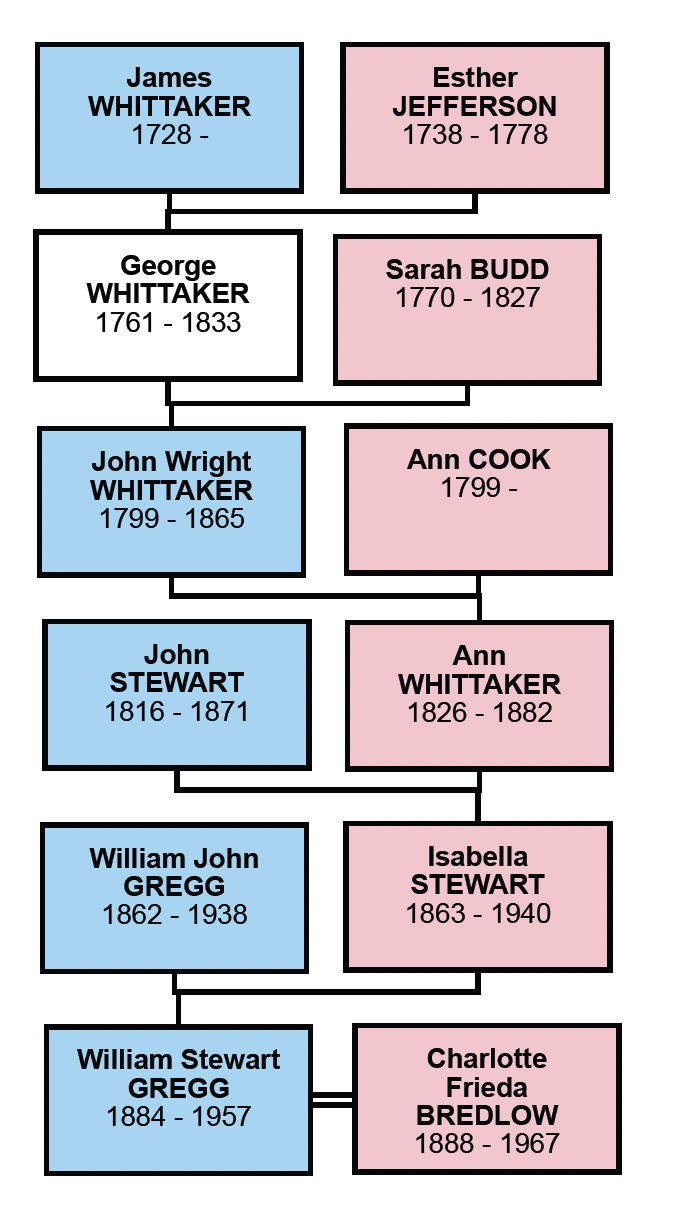
George Whittaker was born in Warrington, Lancashire, in 1861. His parents were James Whittaker (b 1728) and Esther Jefferson (b 1738) who married in Warrington in 1755. Esther’s baptism record shows that her mother, Mary, was unmarried. They had at least 2 other children, Maria and Edward, both of whom died in infancy.
Brasenose College, Oxford
Nothing else is known about his early life, until he matriculated to Brasenose College Oxford in 1780, as a Hulme exhibitioner. His humble origins are indicated by his father’s designation as “pleb”. He graduated BA in 1784 and MA in 1787 and two years later (22 December 1789) he was elected master of the Free Grammar School at New Alresford, a well-endowed school founded in 1698.
Family
On 2 January 1792 he married Sarah Budd of Ropley. Sarah’s family owned extensive lands and property in Hampshire and thus George from his simple origin had married into substantial wealth. They had five children
- George Byrom
- William Budd
- Edward Jefferson
- John Wright
- Anne
The middle names of his sons were presumably representing the surnames of previous family. Budd was his wife’s maiden name, Jefferson was his mother, and although no direct connection with Byrom or Wright has been established, both were established families in the area.
Headmaster
At New Arlesford he supplemented his income by uniting a boarding school for young gentlemen with the grammar school.According to Sotonopedia, he continued his work in education, and on 8 May 1795 he succeeded Reverend Richard Mant as headmaster of Southampton Free Grammar School, an appointment in the gift of Southampton Corporation. His headmastership is eulogized by Thomas Skelton in his Southampton guide, 20th edition: The Rev Mr Whittaker by his abilities, and his attention to the youth entrusted to his care, has rendered it one of the most genteel and flourishing seminaries of learning in the country. The opportunities of instruction which this ancient and royal seminary present, are as various as they are valuable, youth being here qualified through the instruction of the ablest masters, to occupy either the classical or commercial departments of life, to attain eminence in the mercantile, or celebrity in the literary world". Pupils of note included John Butler Harrison, later fellow of Magdalen College, Oxford, Henry Hurdis, later a well-known engraver (subject of an entry in Oxford dictionary of national biography) and Thomas Lawes Shapcott, headmaster of the Free Grammar School from 1819 to 1854. In August 1806 he was appointed one of the domestic chaplains of the Marquis of Lansdowne.. He continued to live in Southampton until at least 1819 .
Publishing
He was a prolific author of educational works designed for use in grammar and public schools. Most were on classical or historical subjects. Titles include Fabulae in usum scholarum selectae, A concise introduction to the Latin language … for the use of the middle forms in grammar schools (used in Winchester College), Florilegium poeticum (a selection of extracts from Latin poets of which a new edition was printed in 1877), and British chronology. His Southampton printer and publisher was Thomas Skelton, a fellow member of St Lawrence's congregation who had arranged for the mortgage of estates belonging to the Skelton family in Havant to Whittaker in May 1808. This may explain Skelton's exaggerated commendation of his client and financial backer. George himself had close connections with the bookselling and publishing trades through his children, George Byrom Whittker, William Budd Whittaker John Wright Whittaker and Ann Whittaker, who married the printer, Richard Gilbert. The middle names of his sons were obviously representing the surnames of previous family. Budd was his wife’s maiden name, Jefferson was his mother, and although no direct connection with Byrom or Wright has been established, both were established families in the area. He was a prolific author of educational works designed for use in grammar and public schools. Most were on classical or historical subjects. Titles include Fabulae in usum scholarum selectae, A concise introduction to the Latin language … for the use of the middle forms in grammar schools (used in Winchester College), Florilegium poeticum (a selection of extracts from Latin poets of which a new edition was printed in 1877), and British chronology. His Southampton printer and publisher was Thomas Skelton, a fellow member of St Lawrence's congregation who had arranged for the mortgage of estates belonging to the Skelton family in Havant to Whittaker in May 1808. This may explain Skelton's exaggerated commendation of his client and financial backer. George himself had close connections with the bookselling and publishing trades through his children, George Byrom Whittker, William Budd Whittaker John Wright Whittaker and Ann Whittaker, who married the printer, Richard Gilbert.
Final Days
By 1820 he had moved to Northfleet in Kent, acting as curate to the non-resident vicar. He was sometimes erroneously described as vicar, but this was not the case. In those days the "living" for a number of parishes might be held by a single incumbent, who would then "sub-contract" to others. In the case of George, having significant means of his own, he had no need for income from the parish itself. He died at Northfleet on 8 September 1833, aged 72 years. His wife predeceased him by six years (died 17 April 1827, aged 57 years).